White Label Software Development: How to Choose a Partner You Can Actually Trust
EPixelSoft Team
|
8 Jun 2026
|
7 Min Read
Share
White label software development works exactly as described until it doesn't. A design studio closes a client who needs a custom web app. The studio doesn't build software internally. They bring in a development partner, the client never knows the difference, and the agency captures the margin. That is the model working as intended.
The failure mode is quieter. A deadline slips. A deliverable comes back technically correct but misaligned to the client's brief. A bug surfaces in production three weeks after launch. The dev partner is unreachable over a weekend. The agency absorbs all of it — the client escalation, the credibility hit, the remediation cost — because as far as the client is concerned, there is no third party.
Agencies using white label partners report two to three times faster service expansion, according to research from BrandLume. But that efficiency compounds in both directions. A reliable partner accelerates the agency. An unreliable one is a liability the agency cannot explain to its clients.
Most agency guides on choosing a white label development partner list the same criteria: portfolio, price, technology stack, communication style, references. Those are the right things to look at. They are not sufficient.
The Distinction Most Agencies Miss Before Signing
White label development is not the same as outsourcing, though most vendors describe themselves with both terms interchangeably. The practical difference matters.
Outsourcing is delegating execution of work you manage. You define the scope, you review the deliverables, you own the process. The vendor delivers. White label is delegating the entire technical function while you manage the client relationship. The partner is invisible. They make architectural decisions. They interpret requirements when the brief is incomplete. They handle QA. They go live. And if something goes wrong — at any of those steps — the agency wears it.
That accountability gap is why a developer's technical capability is necessary but not the right primary filter. A team can write clean, well-structured code and still fail as a white label partner if they cannot operate within the constraints of an agency's client relationship. The discipline required — maintaining a client's voice, never breaking character, absorbing ambiguity in the brief without asking the client directly — is a different operational muscle than engineering skill.
The EPixelSoft engineering team has spent 12 years building production software for organizations where the stakes are high — FinTech lenders, HealthTech platforms, international NGOs, and funded SaaS startups across the US, UK, Africa, and Asia. With 700+ systems shipped and a proprietary AI platform running in the field, the team writes from direct delivery experience: what breaks in production, what actually works, and what the vendor pitch never tells you.
Statista research found that 48 percent of developers globally cite poorly documented or changing requirements as the leading cause of software project failure. In a white label setup, requirement ambiguity travels through an additional relay: client to agency to partner to development team. Each handoff is a point where context degrades. A partner who cannot manage that relay — who needs direct client access to function, or who interprets gaps with their own assumptions rather than flagging them through the agency — creates problems the agency cannot see until they surface at the client level.
Five Questions That Reveal Operational Reliability
These are not evaluation criteria in the standard sense. They are diagnostic questions that reveal how a partner actually operates, as distinct from how they present in a pitch.
First: have they worked with agencies specifically, not just end clients? Building software for an end client is operationally different from building it as a silent partner for an agency. The agency has its own client relationship to protect. The brief evolves during creative phases. Stakeholders change. Timelines compress when the agency's sales cycle does. A partner who has only served direct clients may be technically excellent and still structurally unsuited to the agency model. Ask for references from agencies, not from clients.
Second: do they hesitate on the NDA? Any white label partner who resists formal confidentiality agreements before work begins is describing the relationship clearly. A proper engagement covers non-disclosure of the agency's name, client names, project details, and the fact of the white label arrangement itself. It should prohibit the partner from approaching the agency's clients directly. It should assign all intellectual property to the agency and its client. If a potential partner qualifies, delays, or requests unusual carve-outs on any of these, that response contains the answer to the question of whether they understand what white label actually requires.
Third: what is their policy when a client asks who built their product? This is the operational test of white label discipline. The question will come up. A client will ask a project manager where the team is located, or inquire about the technology choices, or notice an email signature. A partner who has operated in white label arrangements has a clear, consistent answer prepared. Ask them directly. If the answer is vague or relies on the agency having prepared the client, find out what they do when the agency hasn't.
Fourth: what is their current capacity and how do they scale? A partner who can handle two projects per month is not the right partner for a growing agency. The conversation about capacity needs to happen before the first engagement, not after the second. Ask about team size, current utilization, and what their ramp-up process looks like if volume increases suddenly. Agencies that win new business in batches need a partner who can absorb parallel workloads without slipping existing commitments.
Fifth: how do they handle scope changes mid-project? This is where the pricing model and the operational relationship intersect. Some partners price to win and recover margin through change orders. Others price conservatively and absorb reasonable scope evolution. Ask explicitly: what triggers a change order, who initiates the conversation, and what happens to the timeline when scope expands? The answer reveals whether the partner views scope management as shared problem-solving or as a revenue recovery mechanism.
What It Looks Like in Production
A well-run white label engagement has specific operational characteristics that distinguish it from a generic development partnership.
Communication runs through the agency, not around it. The partner communicates with one contact at the agency. Questions about the brief go to the agency. Clarifications about client preferences go through the agency. The client never receives an email, a Slack message, or an invoice from the development partner. This discipline requires that the partner invest time in the relationship with the agency contact rather than attempting to shortcut through to the client.
Deliverables carry no partner branding. This means code repositories with no partner-identifying comments, documentation in the agency's own templates, and handoff notes that reference the client and the agency's project nomenclature, not the partner's internal naming conventions.
Post-launch support is defined before the project starts. A reliable partner specifies a bug-fix window — typically 30 to 60 days post-deployment — and a clear escalation path. Projects rarely end cleanly at handoff. A production environment surfaces edge cases that staging missed. The agency needs to know, in advance, who to contact and at what response time when something breaks at 11 PM before a client's product launch.
The Technical Depth Question Deserves More Than a Stack List
Agencies that take on varied client work need a partner with genuine full-stack capability across web, mobile, API integrations, and cloud infrastructure. A specialist shop — excellent at one framework, less adaptable to others — creates a matching problem: the agency must either decline work outside that narrow scope or manage multiple white label partners simultaneously.
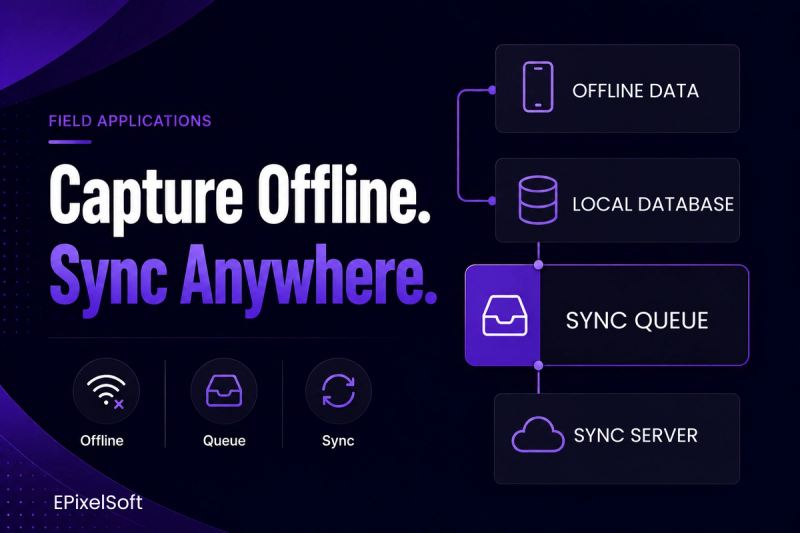
Technical breadth is verifiable. Ask for a portfolio that spans at least three technology verticals. Ask about the most technically complex project delivered in the last 18 months and what made it complex. Ask how they handle projects where the technology decision is part of the scope rather than given in the brief. The partner that has delivered 50 variations of the same WordPress template and the partner that has shipped payment integrations, offline-first mobile applications, and multi-tenant SaaS platforms are both described as full stack somewhere.
AI capability is now a legitimate evaluation dimension. Agencies increasingly need to deliver AI-adjacent features to their clients — automation workflows, data pipelines, intelligent reporting layers. A partner without that capability means the agency cannot service that category of work through the white label model. Ask whether the partner has shipped AI features in production, not whether they have experience with AI tools.
Start With One Project. Then Evaluate the Partnership.
The most reliable way to evaluate a white label development partner is to run a single, real, paid project with them before committing to a standing arrangement. A trial project should be small enough that the agency can absorb a failure, and complex enough to surface how the partner actually operates. A static landing page reveals nothing. A project with an integration, a deadline constraint, and at least one requirement that evolves mid-engagement reveals how the partner handles the conditions that break most partnerships.
During that engagement, assess three things. How do they manage ambiguity in the brief? Partners that surface gaps early, flag assumptions in writing, and propose solutions rather than blocking on incomplete information are worth continuing with. Partners that make decisions silently and deliver a product that reflects those silent decisions create the kind of misalignment that compounds over time.
How responsive are they when something goes wrong? The first problem in a project is a controlled experiment. It shows whether the partner treats escalations as shared problems or as contract management situations.
And finally: did the client experience feel seamless? That is the only metric that defines whether the white label model worked. Not whether the code was clean. Not whether the timeline held exactly. Whether the client, at the end of the engagement, has no reason to ask who actually built their product.
If you are evaluating white label software development partners for your agency, EPixelSoft has operated as the engineering arm for design studios and digital agencies across the US and UK for over a decade. Talk to us about how the engagement model works.
EPixelSoft is an AI-native software engineering company based in Noida, India. Since 2014, we have shipped 700+ production systems across FinTech, HealthTech, NGO operations, and SaaS.