What FinTech Lenders Get Wrong About AI Underwriting (And Why It Fails Compliance)
Anil Kothiyal
|
26 Jun 2026
|
7 Min Read
Share
AI underwriting for FinTech lenders reduces credit decisioning cycle times by 50–90% when implemented correctly, but the majority of deployments create compliance exposure within 12–18 months due to a single architectural error: explainability, audit trail generation, and model governance are built as add-ons rather than core system components. According to Accenture's 2026 Banking Technology Trends report, AI-first credit systems can increase automated approvals by roughly 50% and decisioning throughput by 70–90%. Those numbers are achievable. What the report also makes clear is that institutions reaching them sustainably are the ones that treated governance as infrastructure from day one, not a compliance checkbox applied after deployment.
The pressure FinTech CTOs face going into an AI underwriting build is real. Boards want compressed cycle times. Operations want fewer manual touchpoints. Investors want throughput numbers that prove the platform is scaling. The engineering team responds to this pressure the way engineering teams always do: they optimize for the outcome that is being measured. And right now, the outcome being measured is speed.
The compliance audit arrives later. And when it does, it does not ask how fast the system runs. It asks whether every decision can be explained, documented, and defended.
Why Speed-First AI Underwriting Creates a Compliance Trap
The pattern is consistent across lending platforms that deploy AI rapidly. A machine learning model gets trained on historical loan data. Document processing gets automated. Credit scoring gets augmented with alternative data signals. Processing times drop. Approval rates often improve. The initial results look exactly like what was promised.
Then a borrower files a complaint. Or a regulator requests documentation on a denied application. Or an internal audit surfaces that the model has been making decisions that correlate with protected class variables through proxy inputs — something as seemingly neutral as a borrower's transaction frequency at certain retail categories.
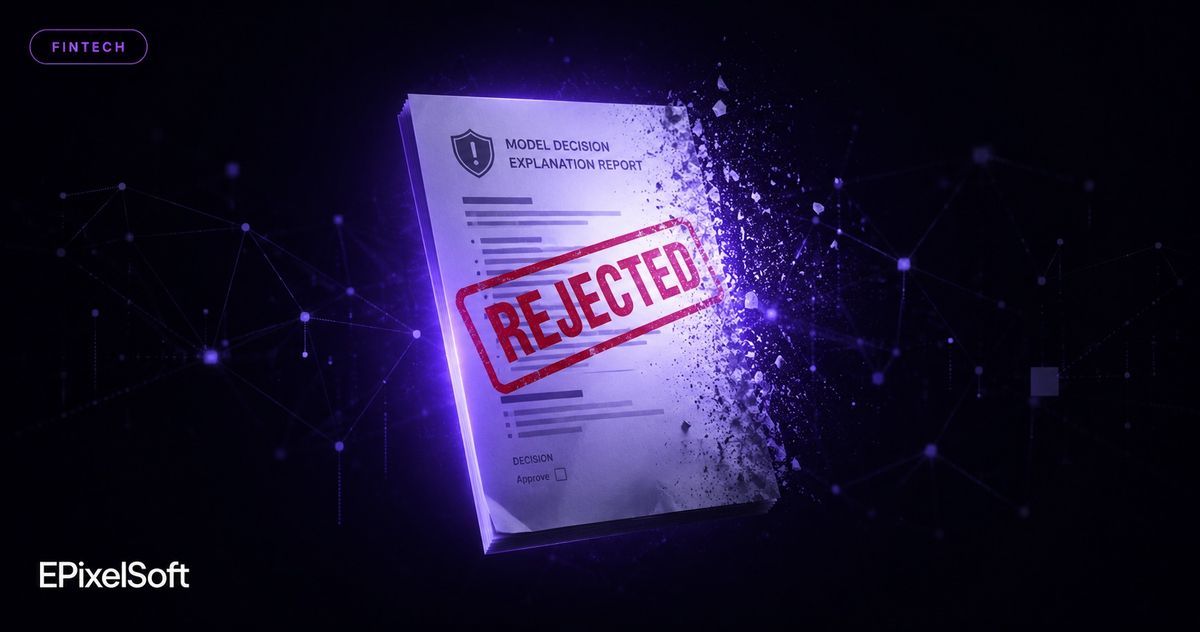
The Massachusetts Attorney General settled with Earnest Operations LLC for $2.5 million in 2025 after their AI lending models were found to have embedded bias in credit decisions. This was not a rogue engineering decision. It was the predictable outcome of deploying a high-performance model without the fairness testing and adverse action documentation infrastructure that regulators require. Under the Equal Credit Opportunity Act and Regulation B, providing a generic reason for a credit denial does not satisfy compliance requirements — even when the decision came from a complex algorithm.
Anil Kothiyal is the Founder and CEO of EPixelSoft, an AI-native software engineering firm with 12 years and 700+ products shipped across FinTech, HealthTech, NGO operations, and SaaS. He has led engineering engagements for clients across the US, UK, Africa, and Asia — including platforms that compressed underwriting cycles from days to hours and field reporting systems deployed in East Africa. Anil writes about AI in production, high-stakes software delivery, and what it actually takes to build systems that hold up at scale.
On April 17, 2026, the Federal Reserve, OCC, and FDIC issued revised interagency guidance on model risk management through SR 26-2, reinforcing that model governance expectations apply regardless of how sophisticated the underlying AI is. The CFPB's position remains the same as it has been: there is no advanced technology exception to federal consumer financial law.
The Architecture Decision That Determines Everything
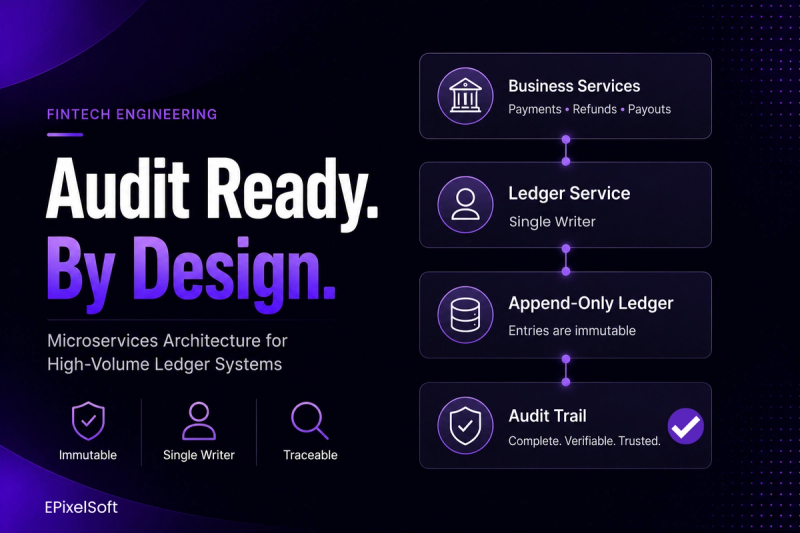
There are two fundamentally different ways to build an AI underwriting system. The first is to take an existing loan management platform, connect an AI decisioning layer on top of it, and optimize that layer for throughput. The second is to design the system so that explainability, audit trail generation, and model lineage documentation are native outputs of every decision the system makes.
The first approach is faster to build. It produces impressive demo results. It also creates what Gartner's AI in Banking Risk Management analysis describes as a black-box layer sitting on top of a loan management system — audit exposure that most compliance teams will not accept when the regulator eventually arrives.
The second approach requires more upfront architecture work. It means designing the data pipeline so that every input variable that influences a credit decision is logged, versioned, and traceable. It means building adverse action reason codes into the decision engine itself — not patching them in later using a separate compliance tool. It means implementing SHAP or comparable explainability frameworks not as a reporting feature but as a component of the real-time scoring pipeline.
The EU AI Act has classified credit scoring as a high-risk AI application, requiring mandatory conformity assessments, bias testing, and transparency documentation before deployment. US lenders operating internationally face this directly. But even domestically, the CFPB's Winter 2025 Supervisory Highlights make the direction unambiguous: examiners now expect to trace the precise data elements and logic used for any adverse action. That is impossible if the underwriting system was not designed to produce that trace.
What Governance-First AI Underwriting Looks Like in Production
A US commercial lending company that we built with compressed their underwriting cycle from 9 days to 38 hours. That result gets cited because the number is concrete. But the more important part of that build is what made it sustainable: the audit trail was not a reporting module. It was a core output of the decisioning engine. Every credit decision logged the feature importance scores, the version of the model that produced it, the input data hash, and the reason codes that would be required for any adverse action notice.
This architecture added several weeks to the initial build. It also meant the platform could pass a regulatory examination without needing to reconstruct decision logic after the fact. When regulators or internal audit teams request documentation, the system produces it directly. There is no interpretive gap between what the model did and what the audit record says.
Institutions that have deployed AI-enhanced commercial underwriting with this architecture are reporting 40–60% reductions in analyst time per commercial loan, according to Timvero's analysis of 2026 lending deployments. Deloitte's 2026 banking outlook documents 10–15% conversion improvements and 25–35% cost reductions in origination among lenders running AI credit decisioning on unified orchestration platforms. The speed gains are real. The difference between lenders capturing those gains sustainably and lenders facing enforcement actions is the architecture decision made before the first line of code was written.
In practice, governance-first AI underwriting requires several specific engineering decisions. The model pipeline must version every trained model and log which version produced each decision. The feature engineering layer must document what input variables are feeding the scoring model, with particular attention to proxy variables that could correlate with protected classes. The adverse action module must generate specific, accurate reason codes in real time — not from a post-hoc lookup table, but directly from the model's decision logic. And the monitoring layer must track model performance and fairness metrics continuously, with automated alerts when drift exceeds defined thresholds.
The Engineering Reality Most AI Lending Vendors Do Not Discuss
Most AI lending vendors sell the speed story. The demo shows a loan application processed in minutes. The pitch deck has the throughput numbers. What the sales conversation rarely covers is the model risk management overhead that SR 26-2 now requires from every institution: model validation before deployment, ongoing performance monitoring, clear retraining triggers, documentation of model assumptions and limitations, and third-party vendor oversight protocols when the AI component comes from an external provider.
For FinTech lenders building on a SaaS lending platform with an AI layer bolted on, this creates a specific problem. The vendor controls the model. The lender is responsible for compliance. If the vendor cannot provide model lineage documentation, training data provenance, feature importance logs, and version history — all of which SR 26-2 expects — the lender bears the regulatory exposure for a system they did not build and cannot fully audit.
This is the argument for custom-built underwriting systems in lending contexts where the regulatory surface area is significant. A custom system gives the lender full ownership of the model documentation, the audit trail architecture, and the retraining governance process. The initial build cost is higher. The compliance cost — and the cost of enforcement actions avoided — is substantially lower over any meaningful time horizon.
Fannie Mae's Lender Letter LL-2026-04, issued in March 2026, established an AI and machine learning governance framework for seller/servicers. Freddie Mac's corresponding AI requirements took effect the same month. These are not future considerations. They are current requirements that determine secondary market eligibility for mortgage lenders. The institutions most exposed are the ones that deployed AI without a governance architecture and now face the prospect of retrofitting explainability into a system that was not designed to produce it.
Building AI Underwriting That Holds Up
The lenders building AI underwriting that holds up over a regulatory examination cycle are not the ones moving fastest. They are the ones who treated the compliance architecture as a delivery requirement from the start — not a feature to be added in a later sprint.
This means making specific engineering decisions before the first model goes into training: defining what the audit trail must contain, designing the adverse action module to generate reason codes from model logic rather than a separate lookup, establishing the model versioning infrastructure, and specifying what fairness metrics will be tracked and at what thresholds an alert gets triggered. These decisions add time to the initial build. They also determine whether the system is a competitive asset twelve months after deployment or a liability the compliance team is trying to retrofit.
A 9-day underwriting cycle compressed to 38 hours is a real outcome. So is a $2.5 million enforcement settlement. The difference between the two is not the AI model. It is the architecture that surrounds it.
If you are evaluating an AI underwriting build or assessing whether your current system can survive regulatory scrutiny, we are happy to work through the architecture with you. Start with our AI Readiness Audit at epixelsoft.com/services/ai-transformation.
EPixelSoft is an AI-native software engineering company based in Noida, India. Since 2014, we have shipped 700+ production systems across FinTech, HealthTech, NGO operations, and SaaS.


)